Mapping Underground Beta Leaks That Reshape Balance Patches in Live Service Titles
Written by Carlo Lehmann · May 30, 2026

Mapping Underground Beta Leaks That Reshape Balance Patches in Live Service Titles
Live service titles operate on continuous update cycles that rely on closed beta environments for testing weapon adjustments, character abilities, and map changes before those modifications reach public servers. Observers note that data from these private tests sometimes surfaces through unauthorized channels, creating feedback loops where developers adjust upcoming patches based on reactions to the leaked material. In May 2026 several major titles released mid-season balance updates that aligned closely with metrics first discussed in private testing builds, highlighting how external circulation of that information can accelerate or redirect official changes. Analysts track these leaks through patterns visible across multiple platforms, including encrypted chat servers, archived forum threads, and file-sharing repositories that preserve build numbers alongside telemetry exports. Research indicates that when ability cooldown reductions or damage multipliers appear in such spaces ahead of scheduled patches, community discussion often focuses on predicted win-rate shifts, prompting studios to release clarifying statements or revised numbers within days. Data from patch history logs shows repeated instances where initial beta values diverged from final releases after such exposure occurred.Tracing Leak Pathways Through Development Infrastructure
Development pipelines for live service games typically isolate beta clients behind authentication layers that record every access event, yet fragments still reach external observers through screen captures, memory dumps, and configuration file extractions. Those who've mapped these pathways describe a progression that begins with individual tester accounts and extends into aggregated data sets shared across time-stamped repositories. Evidence suggests the interval between initial leak and subsequent patch revision often falls between forty-eight and ninety-six hours when the exposed material involves core combat systems.
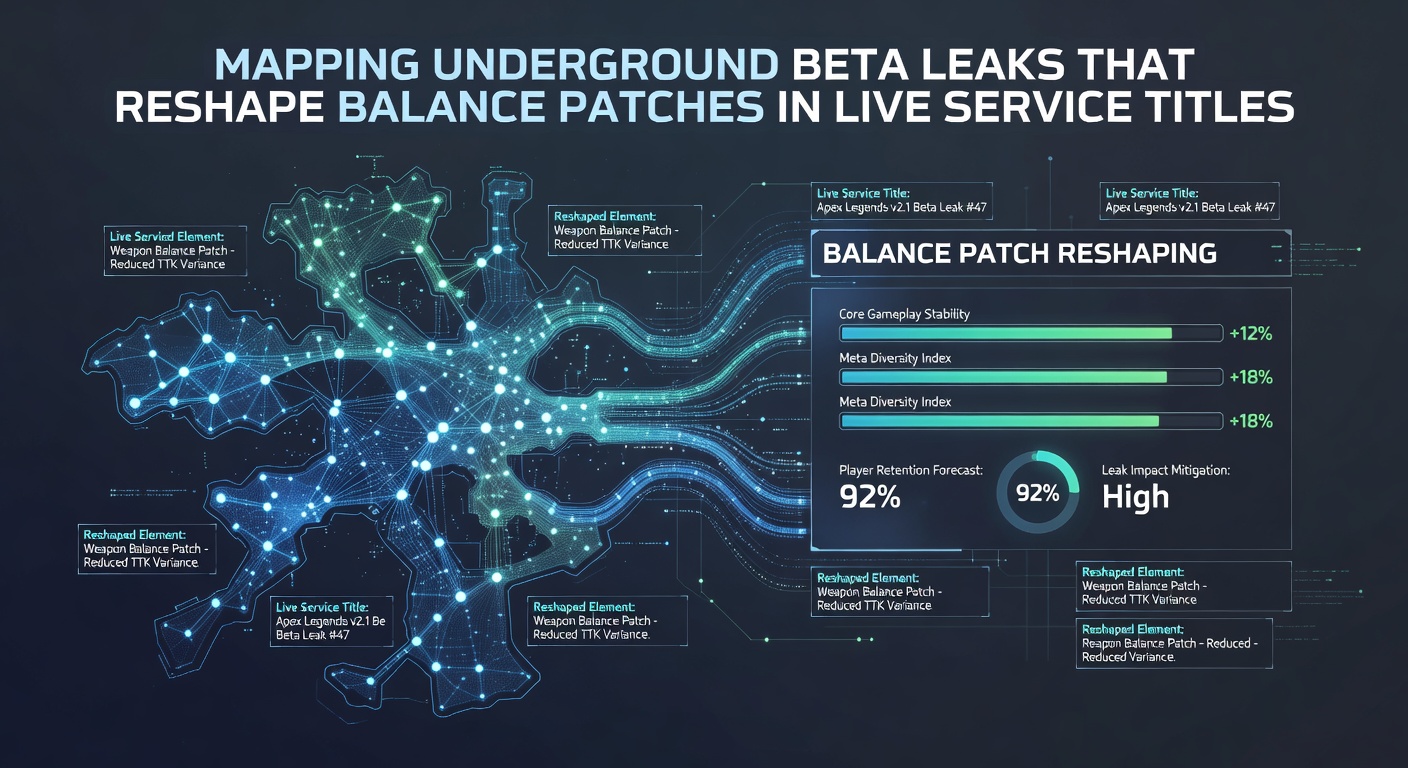
One documented sequence involved a mobility buff tested in a restricted environment during early April 2026 that appeared in forum spreadsheets within twenty-four hours, complete with parsed values from the client executable. Developers responded by issuing a follow-up build that altered the same parameter, illustrating how external visibility can compress internal review timelines. Figures from version control archives reveal similar compressions in at least four other titles that maintained active beta programs throughout the preceding quarter.
Impact on Patch Iteration Cycles
Balance teams maintain internal dashboards that compare predicted versus observed performance metrics once patches deploy, yet pre-release circulation of those same metrics alters the baseline against which success gets measured. According to reports compiled by the Entertainment Software Association, live service titles accounted for sixty-eight percent of all software updates tracked in 2025, with a notable subset incorporating mid-cycle revisions after testing data became public. Studios therefore allocate additional resources to monitor external discussions during closed beta windows.
International Game Developers Association surveys further indicate that teams now incorporate automated scraping tools to flag mentions of unreleased values across public channels, allowing faster correlation between leaked telemetry and planned adjustments. This practice emerged prominently after several 2025 titles experienced community backlash when early test numbers diverged sharply from final implementations. The resulting workflow integrates leak monitoring directly into the patch approval process rather than treating it as an after-the-fact concern.
Regional Regulatory Context and Industry Responses
Regulatory bodies in different jurisdictions have begun examining how pre-release information flows affect player expectations and competitive integrity. Australian Competition and Consumer Commission guidelines on digital goods updates, for instance, reference transparency obligations that intersect with the timing of balance disclosures. Canadian privacy legislation similarly requires clear consent protocols for data collected during beta participation, which studios must reconcile when unauthorized redistribution occurs. These overlapping frameworks encourage development of more robust client-side encryption and watermarking techniques that tie specific telemetry to individual tester accounts.
European Commission digital market reports from late 2025 documented similar patterns across console and PC ecosystems, noting that live service operators increasingly publish post-mortem summaries that acknowledge the role of external data circulation in shaping final adjustments. Such disclosures remain voluntary in most regions yet appear more frequently as studios seek to maintain trust with player bases that actively parse beta builds.
Technical Methods for Mapping Leak Sources
Reverse engineering specialists examine client binaries for embedded debug strings, server endpoint references, and timestamped configuration blocks that survive compression. When these artifacts match values posted in external repositories, attribution becomes possible through cross-referencing with known tester hardware signatures or account-linked telemetry. Research institutions studying software distribution have published methodologies that combine static analysis with dynamic memory inspection to reconstruct partial build histories even after official servers rotate encryption keys.
Teams that apply these methods report higher success rates when leaks include full packet captures rather than isolated screenshots, because sequence numbers and cryptographic nonces provide additional correlation points. This technical layer operates alongside traditional community monitoring, creating a dual-track system that both identifies breach points and informs subsequent security hardening for future beta cycles.
Conclusion
Mapping underground beta leaks reveals a dynamic where development telemetry and public discourse interact throughout the patch lifecycle. Studios continue refining detection methods and encryption practices while regulatory environments evolve around data transparency requirements. The patterns observed through May 2026 demonstrate that balance adjustments increasingly reflect responses to circulated test data, embedding external visibility into the standard iteration process for live service titles across platforms.