Inside Developer Labs: How Aggregated Player Input Refines Haptic Feedback Systems for Narrative Adventures
Written by Carlo Lehmann · Jun 20, 2026
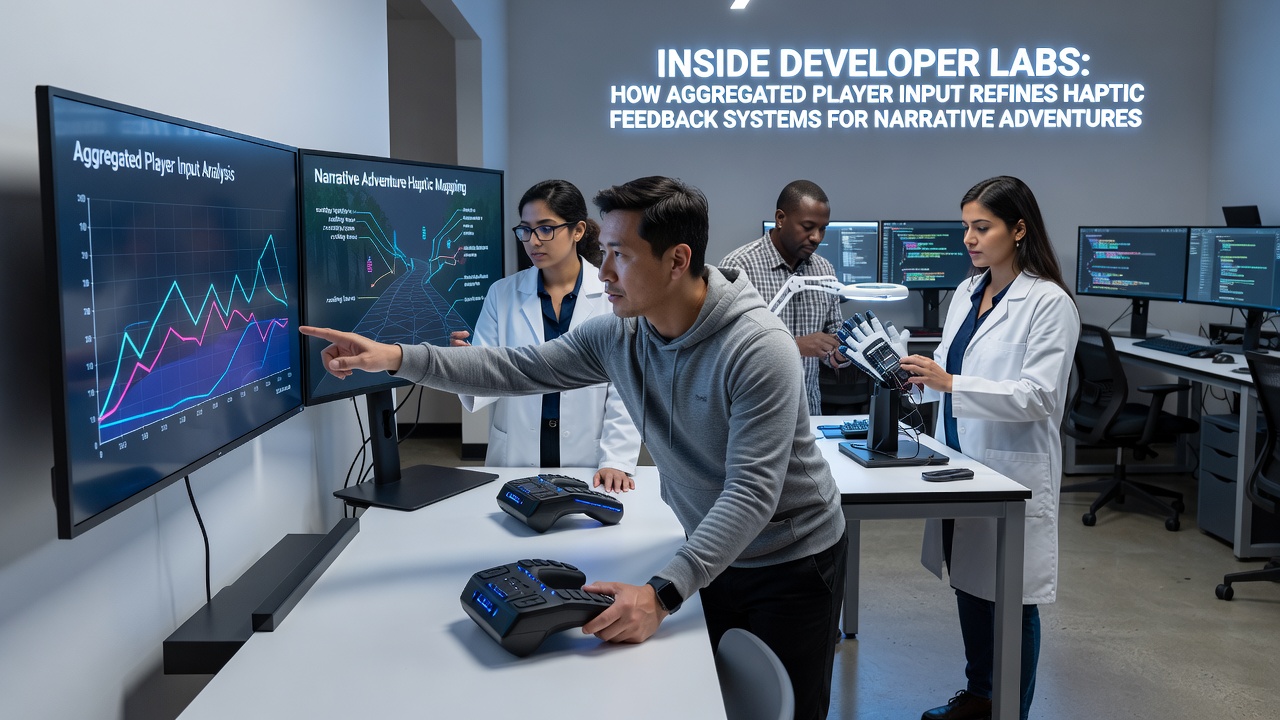
Inside Developer Labs: How Aggregated Player Input Refines Haptic Feedback Systems for Narrative Adventures
Developer teams in specialized labs collect telemetry from thousands of players who engage with narrative adventure titles, and this aggregated input drives iterative adjustments to haptic feedback systems that simulate textures, impacts, and environmental cues through controller motors and advanced peripherals. Studios process datasets that track response patterns during key story moments such as tense explorations or emotional dialogues, allowing engineers to calibrate vibration intensities and timing sequences that align more closely with intended narrative beats. Research indicates these refinements emerge from statistical analysis rather than individual preferences, and data aggregation reveals common trends across diverse hardware configurations including console gamepads and PC force-feedback devices.
Data Aggregation Techniques in Controlled Environments
Labs equipped with sensor arrays record player reactions while participants navigate branching story paths, and software aggregates metrics like grip pressure changes, session duration at specific scenes, and frequency of controller adjustments that signal discomfort or heightened immersion. Engineers at facilities in North America and Europe combine these logs with anonymized demographic details to identify patterns that transcend regional playstyles, for instance showing how certain haptic pulses enhance tension in mystery-driven sequences without overwhelming the audio layer. According to reports from the Interactive Software Federation of Europe, aggregated datasets from 2025 projects already demonstrate measurable shifts in player retention when feedback loops receive fine-tuning based on collective input rather than designer intuition alone.
Processing pipelines filter raw signals through machine learning models that cluster similar reaction profiles, and this step isolates variables such as intensity thresholds for footstep vibrations during stealth sections or subtle rumble effects tied to character heartbeats in dialogue trees. Teams cross-reference these clusters against game build versions to isolate which haptic parameters correlate with extended play sessions, while excluding outliers that stem from hardware malfunctions or atypical controller settings. Observers note that such methods produce reproducible improvements because the volume of data smooths individual variances into reliable baselines for system updates.
Calibration Processes and Iterative Testing Cycles
Once initial aggregates surface, developers run controlled A/B tests inside the lab where small player cohorts experience variant haptic profiles, and results feed back into the central dataset for further refinement. These cycles typically span multiple weeks, during which engineers adjust motor response curves to better match narrative pacing in titles that emphasize atmospheric storytelling over action mechanics. Data from studios active in early 2026 shows that incorporating player input from mixed-device groups, including those using adaptive triggers on PlayStation hardware alongside Xbox impulse triggers, leads to broader compatibility across platforms.
June 2026 brought additional datasets from collaborative testing initiatives that linked haptic refinements directly to quest structure updates, and these connections emerged when aggregated logs highlighted moments where mismatched feedback disrupted narrative flow. Engineers then recalibrated systems to emphasize layered sensations, such as combining low-frequency rumbles for distant thunder with higher-frequency pulses for close environmental interactions, all derived from statistical correlations rather than subjective designer choice. The process relies on continuous monitoring tools that update models in near real time as new player sessions contribute to the pool.
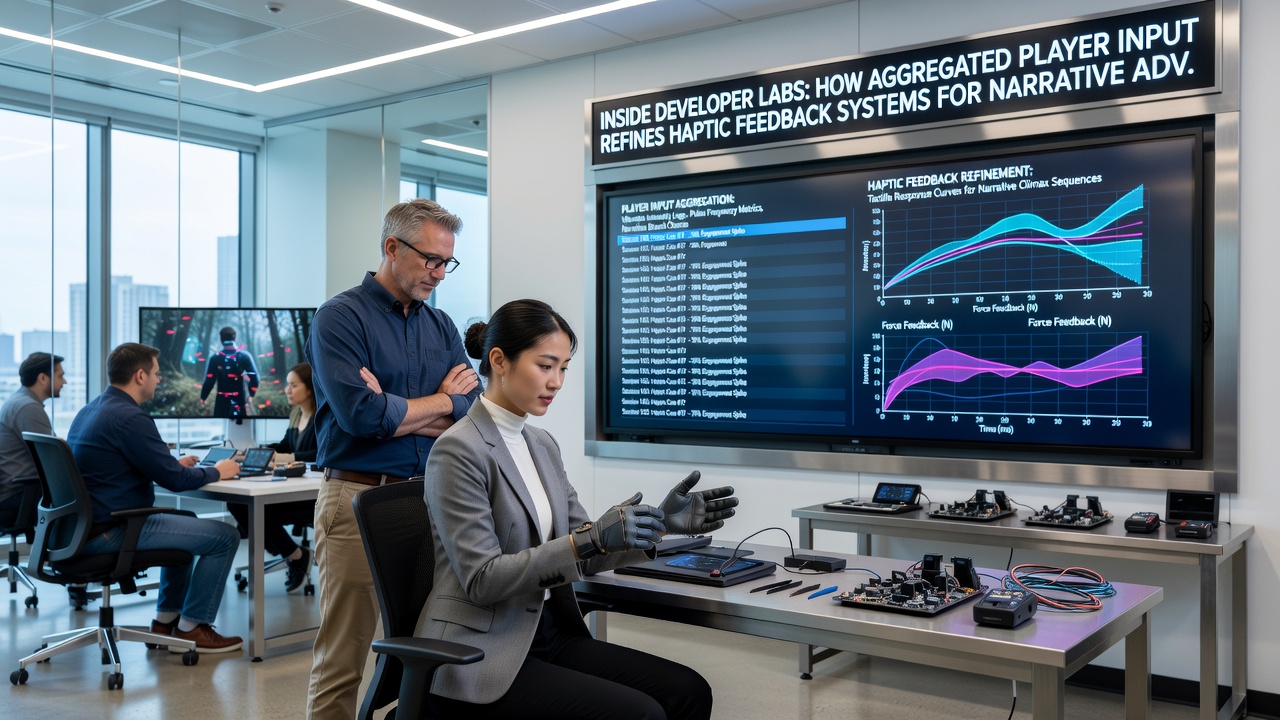
Integration with Narrative Design Elements
Narrative adventures benefit when haptic systems evolve through player-derived data because story-driven mechanics often hinge on subtle emotional cues that standard presets overlook. Aggregated input helps pinpoint sequences where players expect heightened tactile feedback, such as during puzzle resolutions or revelation scenes, and labs translate these expectations into precise motor commands that reinforce thematic elements without breaking immersion. Research from the Australian Centre for Games Research has documented how such data-driven approaches correlate with improved engagement metrics in story-focused releases across 2025 and into mid-2026.
Developers maintain version-controlled haptic libraries that receive periodic patches informed by ongoing aggregation, and these updates address regional variations in controller usage that surface in global player pools. For example, datasets reveal that players in certain markets favor stronger feedback during exploration phases, prompting targeted adjustments that preserve core narrative intent while accommodating hardware differences. The integration remains iterative because new story branches introduced in updates generate fresh input streams that require re-analysis before deployment.
Challenges in Scaling Aggregated Insights
Scaling these systems demands robust privacy safeguards during data collection, and labs implement anonymization protocols that strip identifiable information before aggregation begins. Hardware variability across consoles and PCs introduces noise into datasets, yet statistical methods isolate meaningful trends by normalizing outputs against baseline device specifications. Teams also contend with narrative titles that feature highly variable play lengths, which means aggregation must account for incomplete sessions alongside full completions to avoid skewed results.
Despite these hurdles, the methodology continues to expand because aggregated player input consistently yields feedback profiles that generalize better than small-scale internal testing alone. Studies tracking industry adoption show increased reliance on such techniques in projects scheduled for late 2026 releases, particularly those that blend linear storytelling with player-driven choices.
Conclusion
Aggregated player input has become a cornerstone of haptic refinement for narrative adventures as labs convert large-scale telemetry into actionable calibration data that enhances story delivery across platforms. The approach combines statistical processing with iterative testing to produce systems that respond to collective patterns rather than isolated preferences, and ongoing work through 2026 continues to tie these refinements to evolving game structures. External validation from research bodies across multiple regions supports the continued integration of these methods into future development pipelines.